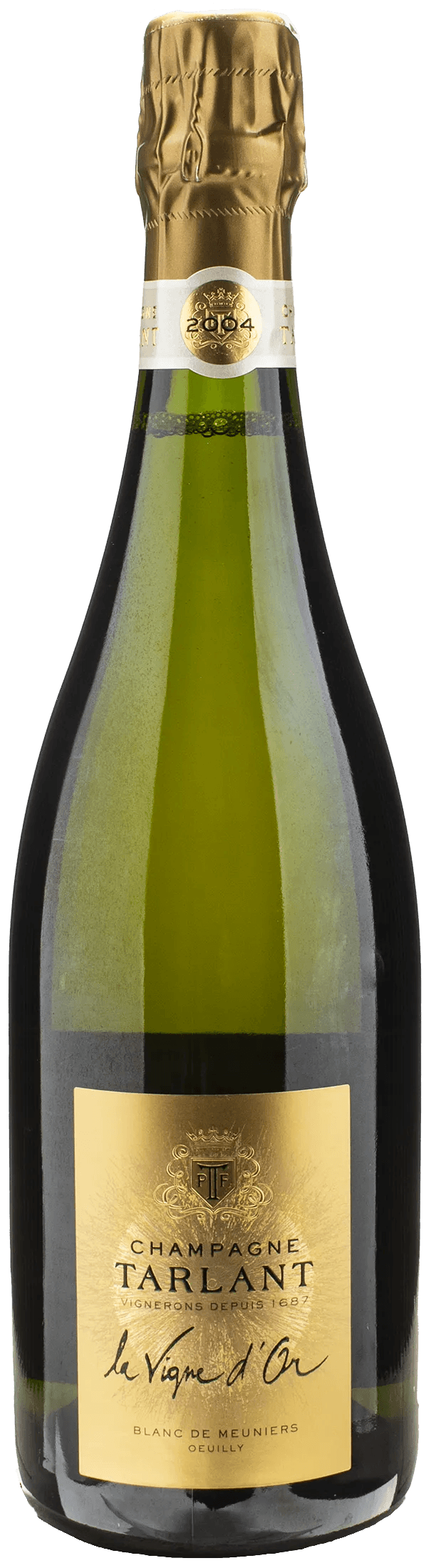
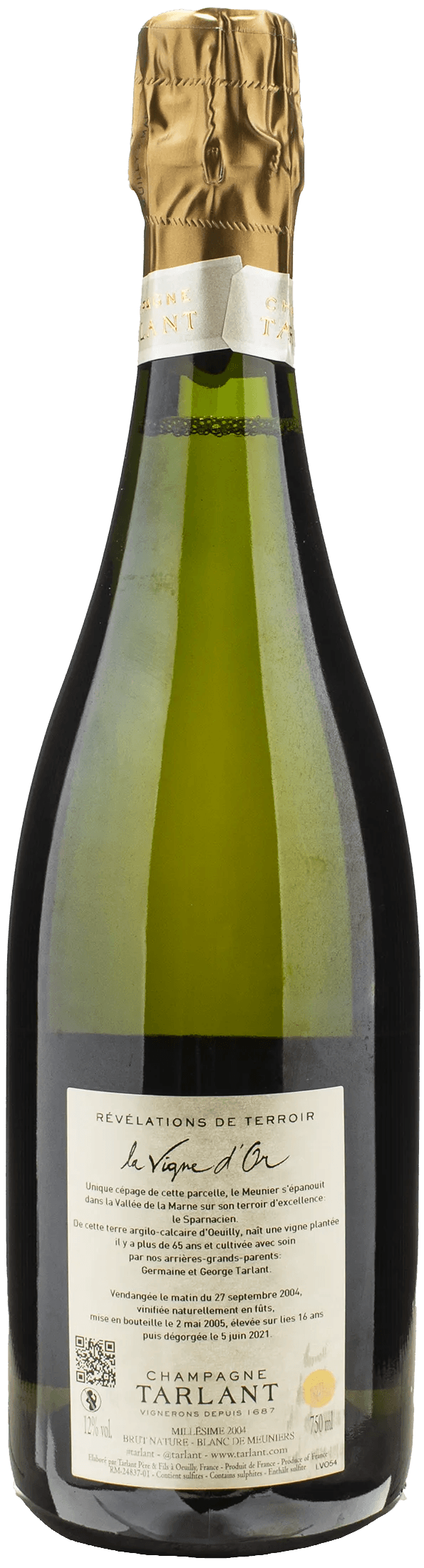
Tarlant Champagne La Vigne d'Or Brut Nature 2004
TarlantTarlant Champagne La Vigne d'Or Brut Nature 2004 is a rare, single-vineyard expression of Pinot Meunier that shows just how profound this often-underestimated grape can be. Sourced from old vines and bottled with zero dosage, it offers a…
+ Read more


Tarlant Champagne La Vigne d'Or Brut Nature 2004 is a rare, single-vineyard expression of Pinot Meunier that shows just how profound this often-underestimated grape can be. Sourced from old vines and bottled with zero dosage, it offers a pure, unadorned snapshot of both the 2004 vintage and its distinctive terroir. This is Champagne for serious enthusiasts: precise, characterful, and deeply reflective of place.
Tasting Notes
In the glass, La Vigne d’Or 2004 shows a deep lemon-gold hue with subtle amber highlights, a visual cue to its extended aging and concentration. The mousse is fine and persistent, forming a delicate bead that supports the wine’s complexity. On the nose, layers unfold gradually: ripe orchard fruits (baked apple, pear), Mirabelle plum, candied citrus peel, and dried flowers, followed by notes of toasted brioche, hazelnut, honeycomb, chalk dust, and a faint hint of spice and smoke. The palate is dry and taut, as expected from a Brut Nature, yet generous in texture thanks to long lees aging. You’ll find flavors of yellow apple, quince, and preserved lemon interwoven with notes of roasted nuts, pastry, and wet stone. The acidity is vibrant but well-integrated, giving the wine lift and precision, while the fine, chalky minerality provides a long, sapid finish. This 2004 still has beautiful energy and can continue to evolve in bottle for several more years, gaining additional nuance of dried fruit, truffle, and tertiary complexity.
Production
La Vigne d’Or comes from a single parcel of old Pinot Meunier vines in the village of Oeuilly on the Marne Valley’s slopes, a site known for its mix of sandy topsoils over chalk and clay-limestone. Many of these vines are very old and deeply rooted, giving naturally low yields and remarkable concentration. Harvest is done by hand, with strict selection in the vineyard to ensure only perfectly ripe, healthy bunches are used. In the cellar, Tarlant ferments the base wines with indigenous yeasts, often in oak barrels, and allows them to undergo extended élevage on the lees for added texture and complexity. The wine is then aged for many years on its lees in bottle before disgorgement, and bottled as Brut Nature with zero dosage, letting the terroir and the 2004 vintage speak without the influence of added sugar.
Food & Serving
This is a gastronomic Champagne that shines at the table. Pair it with refined seafood dishes such as scallops with beurre blanc, turbot or sole, lobster, or rich shellfish risottos; it also works beautifully with roasted poultry, veal in cream sauces, mushroom dishes, and aged hard cheeses like Comté or Parmesan. Serve at 10–12°C (50–54°F) to allow the aromatics and texture to fully express themselves. Decanting for 15–30 minutes in a broad-based decanter can be beneficial for a mature vintage like 2004, helping the wine to open up and reveal its more complex, tertiary notes.
Producer
The Tarlant family has been growing vines in Champagne since the 17th century and is among the region’s most respected grower-producers. Based in Oeuilly in the Vallée de la Marne, they were early champions of terroir-driven, low- or zero-dosage Champagnes, long before it became fashionable. Today, the domaine farms a mosaic of parcels across multiple villages, many of them old vines, and works with meticulous, sustainable practices in the vineyard and a low-intervention philosophy in the cellar. Their single-vineyard cuvées like La Vigne d’Or have helped cement Tarlant’s reputation as one of Champagne’s leading artisans, offering wines of great personality, precision, and aging potential.
 4.7 on Trustpilot