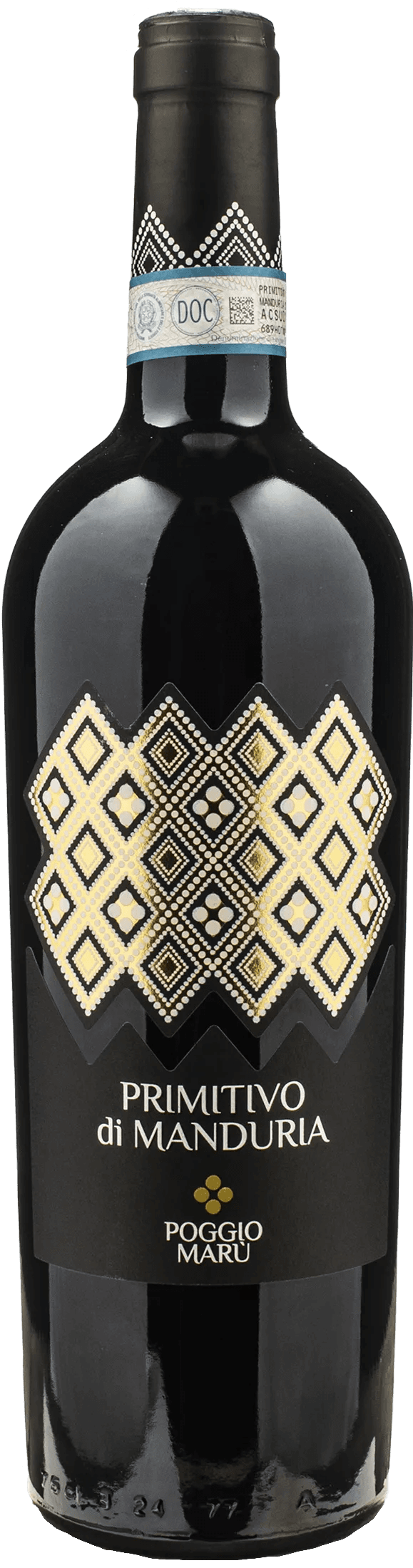
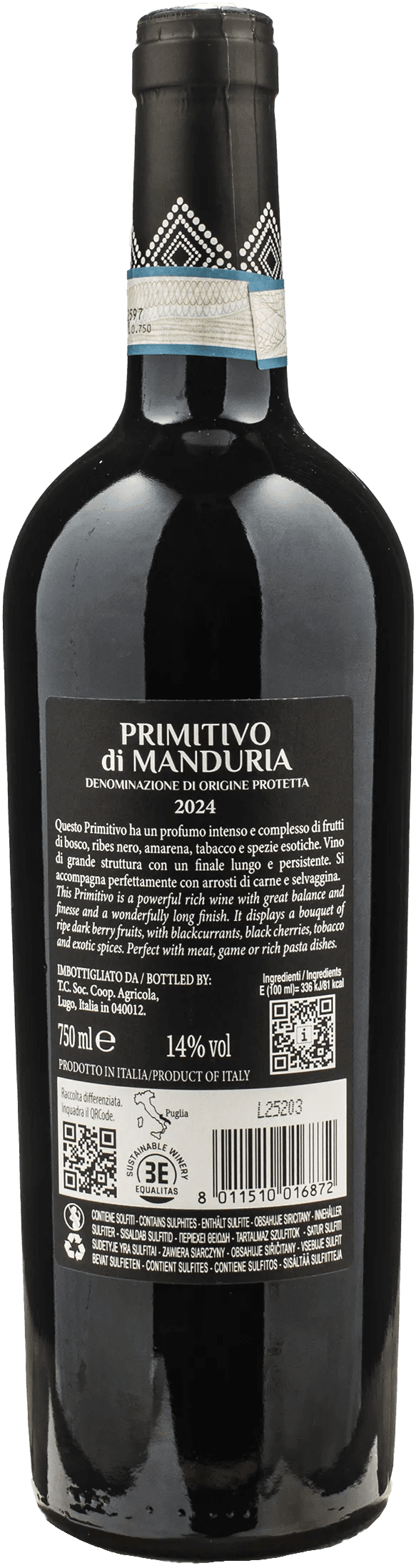
Poggio Maru Primitivo di Manduria 2024
Terre CevicoPoggio Maru Primitivo di Manduria 2024 captures the sun-drenched character of Apulia in a rich, velvety red that’s instantly appealing yet surprisingly nuanced. Crafted from old-vine Primitivo grown around Manduria—one of southern Italy’s…
+ Read more


Poggio Maru Primitivo di Manduria 2024 captures the sun-drenched character of Apulia in a rich, velvety red that’s instantly appealing yet surprisingly nuanced. Crafted from old-vine Primitivo grown around Manduria—one of southern Italy’s most prized zones—this wine offers generous fruit, smooth tannins and a distinctly Mediterranean personality. Terre Cevico brings careful, modern winemaking to a historic appellation, delivering a Primitivo that feels both authentic and thoroughly polished.
Tasting Notes
In the glass, Poggio Maru Primitivo di Manduria 2024 shows a deep, opaque ruby core with purple reflections along the rim, hinting at its youth and concentration. The nose is expressive and inviting, layered with ripe black plum, blackberry jam and dark cherry, wrapped in notes of sweet spice, vanilla, licorice, and a touch of cocoa. Subtle hints of dried figs, Mediterranean herbs and a whiff of warm earth add complexity. On the palate, this Primitivo is full-bodied and plush, with a smooth, almost creamy texture and soft, ripe tannins. Flavors of juicy blackberries, baked plums and black cherries unfold alongside notes of chocolate, cinnamon, clove and a gentle balsamic lift. The natural richness of Manduria fruit is balanced by a fresh, food-friendly acidity, leading to a long, warming finish with lingering spice and dark fruit. Enjoyable now for its generous, primary fruit, it can rest comfortably for 3–6 years, gaining softer edges and a touch more savory complexity over time.
Production
The Poggio Maru Primitivo di Manduria 2024 is sourced from vineyards in Apulia’s Manduria area, where old Primitivo vines thrive on sun-baked, iron-rich clay and limestone soils just inland from the Ionian Sea. This warm, dry Mediterranean climate, tempered by maritime breezes, allows grapes to ripen fully while retaining enough freshness for balance. Grapes are typically harvested by hand at optimal ripeness, with careful selection to ensure only the healthiest, most concentrated bunches are used. In the cellar, the must undergoes a controlled-temperature fermentation to preserve aromatics and build structure, followed by maceration on the skins to extract color, flavor and soft tannins. Maturation in a combination of stainless steel and oak (often large barrels or barriques) helps integrate the wine, round out its texture and add gentle notes of vanilla and spice without overwhelming the natural fruit.
Food & Serving
This Primitivo di Manduria is made for hearty, flavor-packed dishes. It pairs beautifully with grilled or roasted red meats, slow-cooked lamb shanks, barbecue ribs, and rich ragùs over pasta. It’s also an excellent partner for aged cheeses, lasagna, pizza with spicy salami, and savory dishes featuring tomato, olives and herbs. Serve at 16–18°C (60–64°F) to highlight its fruit and spice; slightly cooler for a fresher, more vibrant expression, slightly warmer for extra plushness. A short decant of 30–45 minutes can help the wine open up and soften the tannins, especially in its first couple of years.
Producer
Terre Cevico is a well-established Italian cooperative group with roots dating back to the mid-20th century, uniting numerous growers across several Italian regions under a shared commitment to quality and regional authenticity. Over the years, the group has expanded its reach from its historical heartland in northern and central Italy to include partnerships and projects in the south, such as Apulia, where Primitivo di Manduria has become one of Italy’s flagship southern reds. By combining the deep local knowledge of growers with modern, quality-focused winemaking, Terre Cevico has helped bring approachable yet characterful wines like Poggio Maru to a wider audience. Their work emphasizes reliable quality, regional expression and strong relationships with growers—values that have earned them a solid reputation both in Italy and in export markets.
 4.7 on Trustpilot