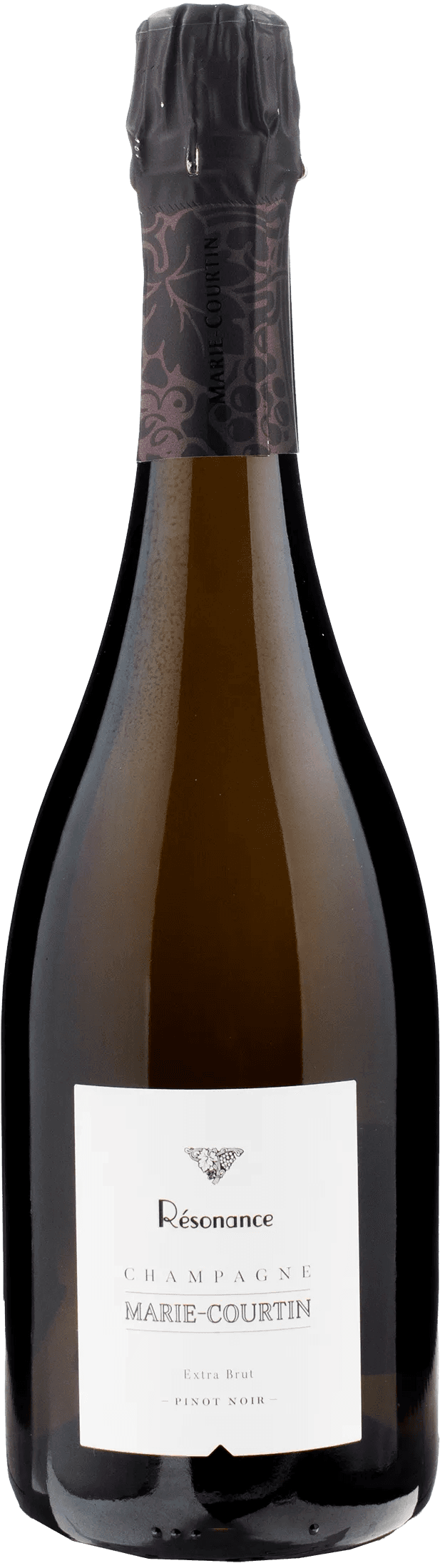
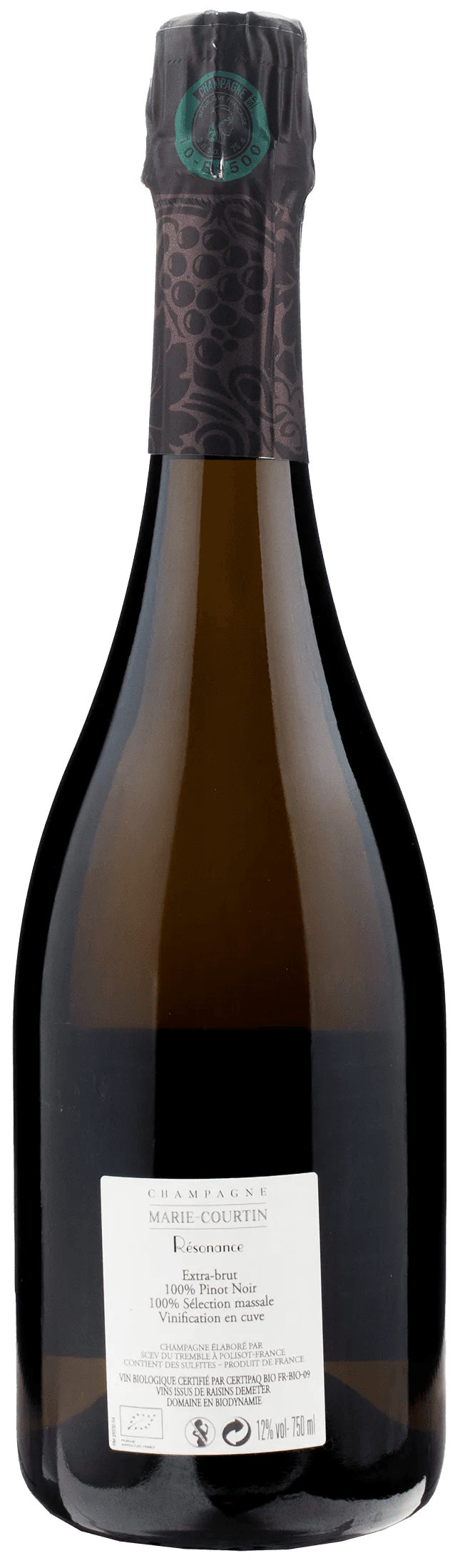
Marie Courtin Champagne Resonance Extra Brut
Marie CourtinMarie Courtin Champagne Résonance Extra Brut is a strikingly pure, terroir-driven Champagne that showcases the finesse and precision of single-vineyard Pinot Noir. Crafted in tiny quantities, it has become a favorite among sommeliers and…
+ Read more


Marie Courtin Champagne Résonance Extra Brut is a strikingly pure, terroir-driven Champagne that showcases the finesse and precision of single-vineyard Pinot Noir. Crafted in tiny quantities, it has become a favorite among sommeliers and collectors who seek characterful, grower-made Champagne over big-brand blends. Résonance is all about energy, minerality, and tension—an elegant expression of the Côte des Bar that captures both place and philosophy in the glass.
Tasting Notes
In the glass, Résonance typically shows a luminous, pale gold color with a fine, persistent bead that hints at its careful élevage and naturally vibrant acidity. The nose is focused and refined: expect notes of crisp red apple, citrus zest, and white flowers layered with chalky minerality, hints of wet stone, delicate brioche, and often a whisper of spice or dried herbs from the Pinot Noir. On the palate, the wine is taut, lively and deeply textural, with a core of juicy orchard fruits, lemon peel, and subtle red berry tones wrapped in a saline, mineral-driven frame. The Extra Brut dosage (very low sugar) keeps the style dry and precise, highlighting the purity of the fruit rather than sweetness. The finish is long, clean, and resonant—true to its name—leaving impressions of citrus, crushed stone and a gentle savory edge. While beautifully drinkable on release, Résonance can develop additional complexity over 3–6 years in the cellar, gaining more autolytic notes, creaminess, and depth without losing its freshness.
Production
Résonance comes from biodynamically farmed Pinot Noir vines in the Côte des Bar, in the southern part of the Champagne region of France. This area, with its Kimmeridgian limestone and clay soils, is closer in geology to Chablis than to northern Champagne, giving the wines a distinctive chalky-mineral character and a ripeness well-suited to low-dosage styles. Yields are kept low and grapes are harvested by hand at optimal ripeness to preserve both concentration and natural acidity. In the cellar, Dominique Moreau (the woman behind Marie Courtin) follows a minimal-intervention philosophy: indigenous yeasts, careful pressing, and often fermentation and aging in stainless steel or neutral vessels to avoid masking the terroir. Malolactic fermentation may be allowed or blocked depending on the vintage’s balance, and dosage is kept very low to maintain a pure Extra Brut profile that lets the soil and fruit speak clearly.
Food & Serving
This Champagne’s tension and precision make it an excellent match for clean, high-quality ingredients and refined dishes. Pair it with oysters, scallop crudo, sushi and sashimi, or delicate white fish with citrus or herb-driven sauces. It also works beautifully with soft goat cheese, Comté, or lightly aged cheeses, as well as simple poultry dishes, vegetable terrines, and charcuterie where you want refreshment and cut rather than weight. Serve well-chilled, ideally around 8–10°C (46–50°F); if too cold, allow the wine a few minutes in the glass to open up. Decanting is not essential, but pouring the first glass and letting the bottle sit on ice for 10–15 minutes with some air contact often helps the aromatics unfold and adds a touch more generosity on the palate.
Producer
Marie Courtin is the visionary Champagne project of Dominique Moreau, based in the village of Polisot in the Côte des Bar. Named in honor of her grandmother, the domaine is known for its highly individual, terroir-focused Champagnes made from single varieties, single parcels, and often single vintages. Working biodynamically and with a strong commitment to minimal intervention, Moreau has quickly gained a cult following for wines that are both intensely precise and spiritually expressive, standing out in a region still dominated by larger houses. Her cuvées, including Résonance, are frequently praised by critics and wine professionals for their purity, energy and authenticity, helping to cement the Côte des Bar’s reputation as one of Champagne’s most exciting and dynamic subregions.
 4.6 on Trustpilot