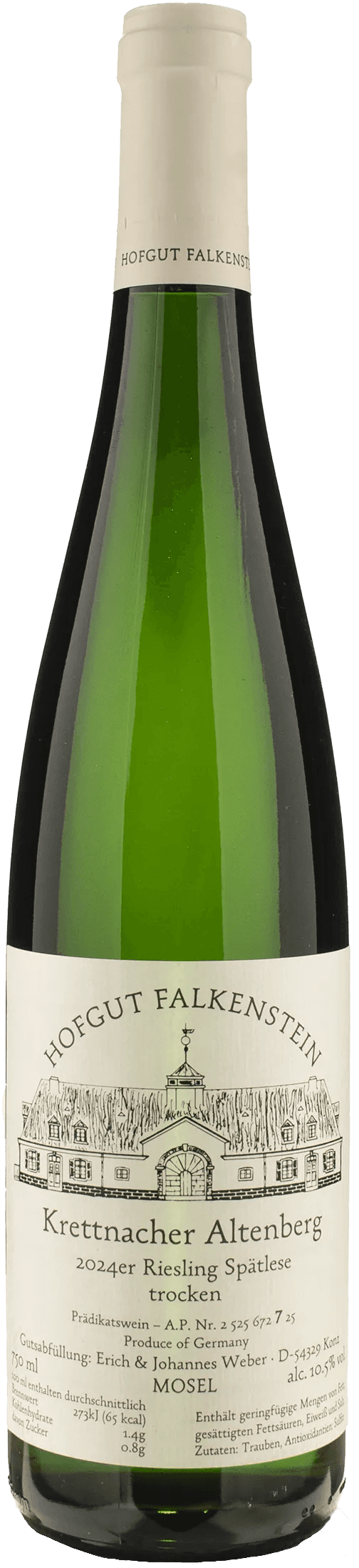
Hofgut Falkenstein Krettnacher Altenberg Riesling Spatlese Trocken 2024
Hofgut Falkenstein’s Krettnacher Altenberg Riesling Spätlese Trocken 2024 is a razor‑sharp, classically Saar dry Riesling from one of Germany’s most beloved traditional estates. Sourced from the steep slopes of the famed Altenberg…
+ Read more


Hofgut Falkenstein’s Krettnacher Altenberg Riesling Spätlese Trocken 2024 is a razor‑sharp, classically Saar dry Riesling from one of Germany’s most beloved traditional estates. Sourced from the steep slopes of the famed Altenberg vineyard above the village of Krettnach, it combines crystalline precision with understated intensity. This is a wine for Riesling purists: light on its feet, mineral-driven, and built on electric acidity rather than sheer power.
Tasting Notes
In the glass, the 2024 Krettnacher Altenberg Spätlese Trocken shows a very pale straw to green‑tinged lemon color, with a shimmering, almost weightless appearance that hints at its low alcohol and high acidity. The nose is pure Saar: lime zest, green apple, white peach, and fresh herbs layered over wet slate, flint, and a whisper of white blossom. With air, it gains nuance—crushed stone, lemon pith, and a cool, almost saline edge. On the palate, the wine is bone‑dry, tensile, and ultra‑focused, with a racy spine of acidity that drives flavors of key lime, tart pear, green plum, and grapefruit peel. The hallmark Falkenstein elegance shows in the wine’s delicacy and clarity—nothing feels heavy or over‑extracted. The finish is long, stony, and mouthwatering, leaving impressions of crushed slate, lime, and a salty, almost tonic snap. While delicious young for its vibrancy and cut, this Spätlese Trocken has strong aging potential: over 8–12 years it should gain texture and complexity, with more herbal, smoky, and petrol nuances emerging while retaining its mineral core.
Production
Krettnacher Altenberg is one of the Saar’s great steep slate vineyards, composed primarily of weathered grey slate with pockets of lighter stones that retain warmth while ensuring superb drainage. The cool Saar climate and elevated, south‑facing slopes promote very slow ripening, allowing the Riesling grapes to develop intense aromatics at modest potential alcohol levels. At Hofgut Falkenstein, the grapes are typically harvested by hand in multiple passes (selective picking), ensuring only perfectly ripe, healthy clusters make it to the cellar. Fermentation takes place with indigenous yeasts in traditional large old German fuder (oak casks), at cool temperatures and without heavy manipulation. The wine is handled minimally—no aggressive fining, low sulfur, and extended aging on the fine lees in cask—to preserve purity, precision, and the vivid expression of site. The result is a dry Saar Riesling that feels both timeless and alive, with the vineyard and vintage clearly speaking through the glass.
Food & Serving
This Riesling Spätlese Trocken is superb with dishes that welcome high acidity and minerality. Pair it with oysters, sashimi, and simply grilled white fish, or lean into classic German pairings such as river trout with herbs, schnitzel, or light pork dishes with mustard or citrus accents. It also works beautifully with fresh goat cheese, soft cheeses with a bloomy rind, and vegetable‑driven dishes like asparagus, fennel, or lightly dressed salads. Serve well‑chilled but not icy, ideally around 8–10°C (46–50°F), to let the aromatics and texture unfold. Decanting is not strictly necessary, but a brief splash into a carafe or 15–20 minutes in the glass can help the wine open and reveal more of its floral and slate‑driven complexity.
Producer
Hofgut Falkenstein is a small, family‑run estate in the Saar valley, a cooler subregion of the Mosel in Germany, revered by Riesling enthusiasts for its uncompromisingly traditional style. The Weber family farms steep, historic vineyards around the villages of Niedermennig and Krettnach, focusing almost exclusively on Riesling planted on classic slate soils. Over the past decade, the estate has gained cult status for its low‑alcohol, intensely mineral, and transparently made wines that channel the Saar of earlier eras. Working with minimal intervention, spontaneous fermentations, and aging in old fuder casks, Hofgut Falkenstein has become a benchmark for finely etched, terroir‑driven Rieslings that rank among the most distinctive and ageworthy in the region.
 4.6 on Trustpilot