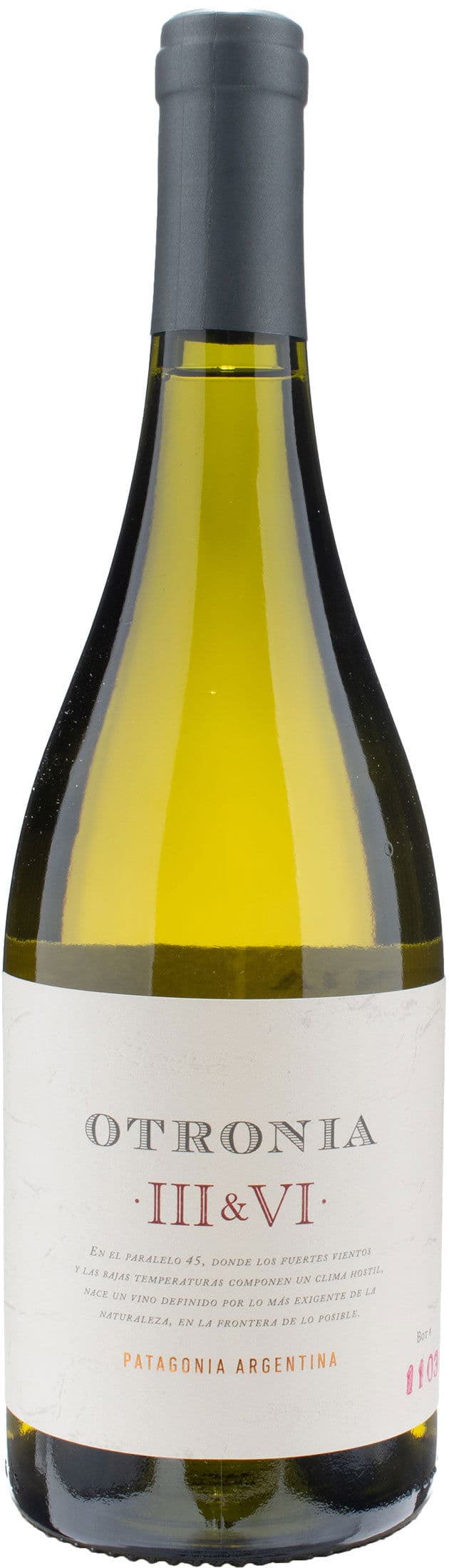
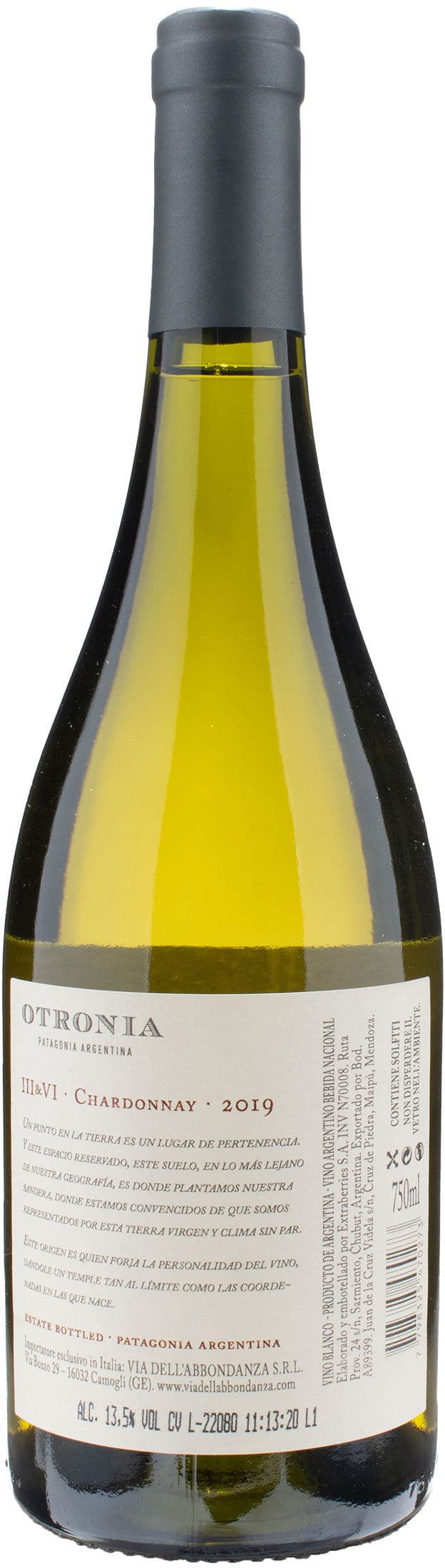
Bodega Otronia III & VI Patagonia Chardonnay 2019
Bodega OtroniaBodega Otronia III & VI Patagonia Chardonnay 2019 is a striking cool-climate Chardonnay from one of the southernmost vineyards on the planet. Crafted in the windswept plains of Patagonian Argentina, it marries precision, freshness and…
+ Read more


Bodega Otronia III & VI Patagonia Chardonnay 2019 is a striking cool-climate Chardonnay from one of the southernmost vineyards on the planet. Crafted in the windswept plains of Patagonian Argentina, it marries precision, freshness and depth in a style that feels both cutting-edge and utterly classic. This cuvée, sourced from selected parcels III and VI of the estate, showcases the unique character of extreme-latitude viticulture and has quickly become a reference point for Patagonian Chardonnay.
Tasting Notes
In the glass, this 2019 Chardonnay shows a bright, pale straw color with greenish reflections, hinting at its youth and vibrancy. The nose is finely etched and elegant, opening with citrus blossom, lemon zest and crunchy green apple, followed by white peach, pear, and subtle notes of wet stone, chamomile and fresh almonds. With air, delicate hints of brioche and light vanilla emerge, testifying to judicious oak handling. On the palate, it is taut and linear at first, then broadens with a creamy, textural mid-palate that never loses its mineral spine. Flavors of Meyer lemon, ripe pear and stone fruit are layered with saline notes, flint and a gentle smokiness. The natural acidity from the Patagonian climate provides terrific tension and length, leading to a persistent, mouthwatering finish. While already beautifully balanced and approachable now, this vintage has the structure and freshness to evolve gracefully over the next 5–7 years, gaining complexity and more pronounced nutty, honeyed nuances with time in bottle.
Production
Bodega Otronia is located in the remote, windswept reaches of Patagonia, where vineyards sit near large bodies of water that help moderate the otherwise harsh climate. The terroir is defined by stony, glacially influenced soils with sand and clay, intense sunlight, strong winds and a very long, cool growing season—conditions that naturally limit yields and intensify flavors while preserving vibrant acidity. Grapes for the III & VI Chardonnay are typically harvested by hand at optimal ripeness to capture both freshness and aromatic purity. In the cellar, the must is gently pressed and fermented at controlled temperatures, often with a combination of stainless steel and carefully selected oak to balance fruit expression with subtle texture and complexity. Aging on fine lees adds creaminess and depth without overpowering the wine’s distinct mineral-driven profile.
Food & Serving
This Patagonian Chardonnay is a versatile partner at the table, especially with refined seafood and poultry dishes. Think seared scallops with lemon butter, grilled prawns, oysters, roasted chicken with fresh herbs, or creamy dishes like lobster risotto and mushroom tagliatelle. It also works beautifully with soft-ripened cheeses such as Brie or Camembert, and mild semi-hard cheeses. Serve chilled but not too cold—around 10–12°C (50–54°F)—to allow the aromatics and texture to fully emerge. A short decant of 15–20 minutes, or simply opening the bottle a bit before serving, can help the wine unfurl its more nuanced mineral and toasty notes.
Producer
Bodega Otronia is a pioneering estate in the far reaches of southern Patagonia, often cited as one of the world’s southernmost wine projects. Established with the ambition to explore extreme cool-climate viticulture, it has helped put Patagonian Argentina on the map for premium, terroir-driven wines. The combination of high winds, cold nights and long, slow ripening seasons produces fruit of remarkable concentration and acidity, particularly well-suited to varieties like Chardonnay and Pinot Noir. Otronia’s meticulous vineyard practices and thoughtful, low-intervention winemaking have earned the winery growing recognition from international critics and wine lovers alike, marking it as a leading voice in the evolution of Argentina beyond its traditional heartlands.
 4.7 on Trustpilot